
Writer’s Digest had a piece in its Writer’s Yearbook 2026 entitled What is Your Story Question?
Story Question?
To quote Ursula Le Guin, the question—what message or question your story has— is not in the right language. “We are writers, not caterers. As a fiction writer I do not speak message or theme. I speak story.”
Each story obviously means something—many things probably—but, I think the inquiry of “What is your story’s theme/message/question,” should be directed at the writer of a sermon, not someone who writes fiction. Fiction, is a way to achieve meaning but to begin a story thinking you have a message to convey or a theme to incorporate undermines the story’s very authenticity, makes it feel contrived, stilted.
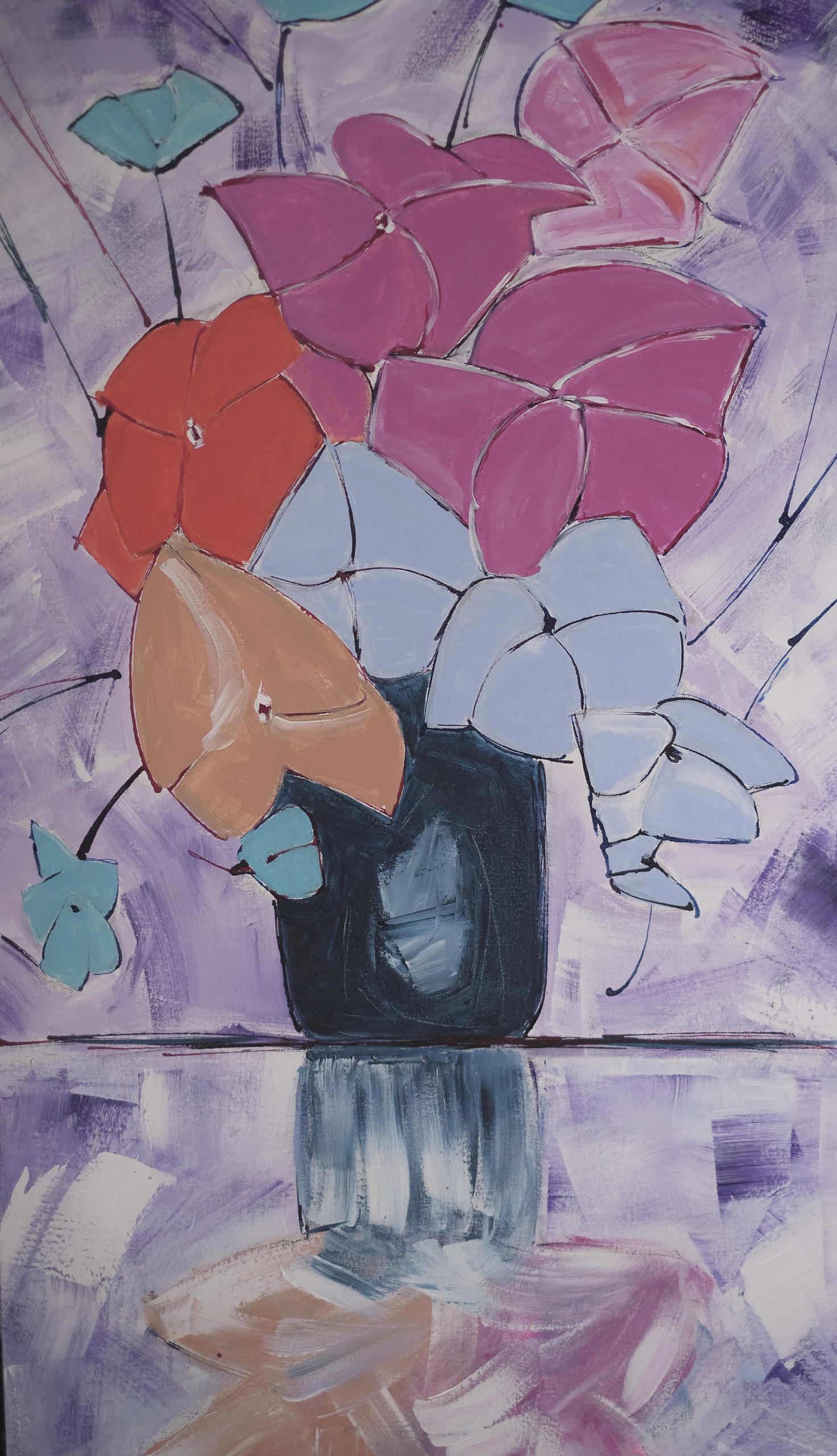
Take this acrylic. Can you find a message? A theme? What question is it posing??
A self-proclaimed art connoisseur (who is actually a doctor of Fine Arts), told me that the reflective surface underneath the vase represented duality evoking the possibility of a world within another, an altered reality. Was she right? I said she was, because this interpretation is so much cooler than: I started painting a vase on top and another scene underneath (some weird vision I had), and messed up the vase so badly that I flipped the canvas over and started anew. In the end I wanted to cover the (now) lower part in brown, as in a table, but I did not have any dark brown, and was out of my Golden Windsor Violet, so I just left it like that.
Le Guin’s piece is entitled A Message About Messages
Painting: Acrylic and ink on canvas—entitled Altered Reality.