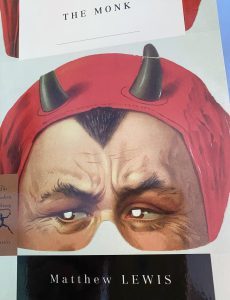
I recently reread Nabokov’s Lolita (1955) and Lewis’s The Monk (1796). Post-modern vs. Gothic or however you want to label them, they speak of the same thing, and they’re both masterpieces.
The protagonists, Humbert Humbert and Ambrosio are flawed—as we all are. Okay, perhaps they’re more flawed. A lot more, but… bare with me a moment.
They’re incapable of restraint. Dante would call this “incontinence”: the failure to control one’s impulses. In other words, they don’t just make bad choices; they can’t seem to stop themselves from making them day in, day out.
Ambrosio’s story is collapse into darkness. In slow motion. Humbert was born bad. He knows it and doesn’t care. With that pompous ‘European’ self-righteous arrogance that justifies every single act of depravity he recounts his guilty pleasure, while Ambrosio starts as the picture of moral authority and slowly gives in to lust and deception. The books have different styles, entirely different—one has devils and magic and one uses comedy and Nabokov’s exquisite wordplay—but ultimately they’re about the same thing:
Incontinence. (As Dante intended—the other one is a medical condition)
What really makes both works stick, though, is how they draw you in. Yes, you. Lolita is the more obvious case: Humbert is performing, constantly, trying to charm and persuade. And the uncomfortable truth is that the prose works. You’re drawn in, even as you ‘know better.’ The Monk pretends to be more moralistic—look at the wages of sin, and so on—but it doesn’t convince. Ambrosio’s downfall is supposed to warn you off, yet you’re fascinated by it. His weakness doesn’t repel. It attracts.
So yes, Humbert and Ambrosio are “incontinent.” They lack control. But reducing them to that misses the point. What makes them fascinating—and makes these novels masterpieces—is how recognizable Humbert and Ambrosio are. They are flesh. They are weak. They sin. They are human.
— Photo. Fuji XH2. Fujifilm 35mm f1.4