

AlessandroB

The Aleph. Weaving a Fabric of Shared Citizenship.

Pakistan–Roots of Extremism

Posted on | May 10, 2010 | No Comments

Extremism
Militant Islam was inspired by Sayyid Qutb’s Ma’alifu al-Tarriq. Its cornerstone is the logic of battle of the oppressed against economic exploitation, and as they say, although Islam aims at peace, it does not seek it cheaply. The Kerry-Lugar Bill tripled the aid to Pakistan, and was supposed to change the overwhelmingly military slant of expenditures, directing foreign aid to education and healthcare, where the influence of religious extremism could be curbed. Reportedly, of the $11billion provided since September 11, eight billion were spent on armaments, $100 million on health care, and a scant few million on education. Your guess is as good as mine for the remaining three billion or so.
We misinterpreted their intentions. After 9/11 Afghanistan was but a pretext for India and Pakistan to continue their rivalry as they had for the past five decades, a continuation of unwarranted expenditures (India and Pakistan are two of the world’s ten largest war machines) and their vicious nuclear arms race. Standing in the Rose Garden, Bush called Pakistan a “virulent democracy” and our “ally on the war on terror”. The truth is that few places on earth harbor such an adamant hatred toward America and none has such significant nuclear arsenal.
Some military analysts imply that there is renewed hope, based on Pakistan’s military incursions in Waziristan and Swat valley, that Pakistan has a renewed will to fight, and after the successful surge in Iraq the Islamic violent extremism is at the “flat end of a popular support curve”, and that banking on the growing civilian resentment of the Taliban, the war in Af—Pak is winnable. The truth is that the socio-economic conditions linked to Jihadism make it nearly impossible for Pakistan to abandon support for Jihadi organizations, which provide the poorest of the poor a sense of purpose. There is a Pashtu saying that says, “When something is broken, someone wants it that way.” The narrative that Pakistan is fighting extremism is an illusion, a drama enacted for our benefit. Publicly the Pakistan government denounce the extremists (although at one point Musharaf praised the Taliban as Pashtuns with “roots in the people”); while privately, it allows them to flourish. There are numerous reasons why the Pakistan military, in particular its Directorate of Inter-Services, the omnipotent ISI, embrace the Taliban as allies. The Taliban are fellow Muslims who share the military’s growing Islamist mood and its increasing distrust and hatred of America. The ISI also perceives the militants as indispensable assets against a historical enemy, India. But perhaps, more importantly, keeping the Taliban alive ensures billions of American dollars in aid, as a pretext to fight the “war on terror”; billions that Pakistan direly needs.
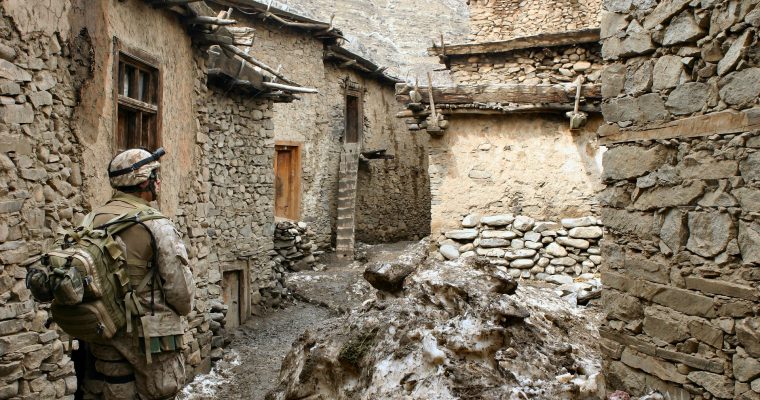
Extremist movements adapt, mitigate, and survive. As the West unleashes regular drone attacks—as often as once a week—Mullah Omar and other prominent Mullah Afghan Taliban Shura live undisturbed in the Federally Administered Tribal Areas, where they are protected by the Directorate of Inter-Services. ISI’s alliance to the Taliban goes back three decades. In the 1980s the CIA used the ISI to provide arms to the Afghan Mujahedin through the FATA. Later, with funding from Saudi Arabia and logistical support from the ISI, the Taliban grew in power and prestige. It was only after the bombing of the Indian embassy in Kabul, with its unequivocal military “signature” and the overwhelming evidence that hinted at ISI involvement, that the U.S. realized the pet snake they had been handling was poisonous. For those who have read the book or seen the film Black Hawk Down, one of the earliest and most influential of the Mujahedeen-turned-extremists was Masud Azhar, who taught his militants, like those who trained with him in Somalia, how to trim the fins of their rocket-propelled grenades to bring U.S. choppers down. Azhar was later imprisoned but freed after a hijacking standoff in Kandahar. He fled to Pakistan and remains at large, most likely in FATA, the new “multi-layered cake of terror.”

Pakistan, The Next 9-11?

Posted on | May 10, 2010 | No Comments

Speak good words to an enemy softly; destroy him root and soul.
–Pashtun saying
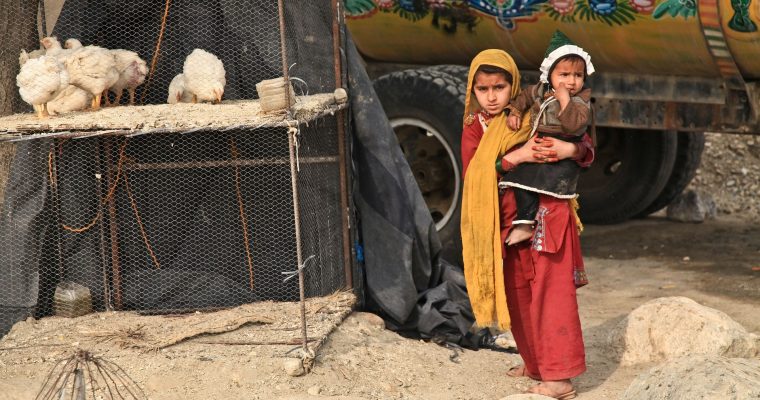
Draped in a salwar kameez with a turban they will tell you that al-Qaeda is an American-made myth. If you tell them that their country is considered the “epicenter of global terrorism”, the “most dangerous place on earth”, with Waziristan as the soul of the Jihadi movement, they will recount a different narrative, one deeply steeped in a sense of national insecurity and five decades of American disregard for Pakistan’s territorial sovereignty. They are, in fact, more likely to believe Bin Laden’s account of the Crusader-Zionist-Hindu conspiracy to oppress them. In the Federally Administrated Tribal Areas (FATA), a stretch of rugged land on the eastern side of the Af-Pak border, they will speak, if not lovingly, at least deferentially, of the Taliban as bearers of law and order. Take rape. The quiet women of Pakistan have the narrative of submission written in their eyes. Men here, as Naipaul observed long ago, have tomcatting rights four women at a time to use and discard as they please. And they rape women or used to. The Taliban ended the endemic rape with public executions. The Islamic Sharia to which the Taliban defer is restrictive and severe—a kind of tyranny—but it is seen, and often welcomed, as a counterweight to the corrupt rule of tribal leaders, the maliks, the British puppets during the imperial rule.
With the lowest growth rate in South-East Asia, an illiteracy rate that is, according to the UN, below 133 countries, a narrow production base hanging on an unreliable cotton crop and low value-added textile industry, Pakistan is a very poor country, if not a downright treacherous swamp, ideal recruiting ground for extremists, who thrive on chaos and failed governance. Pakistan’s ailing institutions direly lack liberalization. Land reforms are long overdue. Pakistan needs large-scale structural reforms. The country is ruled by a central government that is ineffective, if not entirely irrelevant in certain areas. In Karachi, for instance, the MQM secular party defines and implements policy with absolute sovereignty over Zardari cronies. When Musharaff, Bush’s “ally in the War on Terror” left to avoid impeachment, he left Pakistan with chronic poverty, instability, and a power crisis that was filled by the discredited husband of a slain politician. Now there is a nexus of the judiciary and the military, the real ruling elite of Pakistan, to send his successor, Mr. Zardari home, or most likely Switzerland, where he has stashed the millions he has looted.

Errors in Judgment

Posted on | March 1, 2010 | No Comments

Obama seems to believe that we are not fighting a broad-based insurgency in Afghanistan and can, therefore, defeat it quickly as quite evident on the military’s most recent semi-success in Marjah. It is true that the Taliban is controlling at most 15% of the Afghan territory but counties in Kandahar, Helmand, and some other Pashtun provinces, harbor tens of thousands of militants lying in wait, and they count on the support of 20-some million Pashtuns of Pakistan, including the Tehrik-e-Taliban, the ferocious Pakistani Taliban. Add the logistical backup of ISI, the blessing of the Ayatollahs (for now limited to providing arms), and you have a broadly-based, well-funded movement. Even villagers hostile to the old Taliban, will support the neo-Taliban as alternative to the dishonest police and the occupying army that has, for the past eight years, used missile-armed drones, the so-called “family destroyers”. Even those who do not believe in the writ of law the Taliban preach (founded on an extreme interpretation of the Islamic principles of jurisprudence or Sharia) defer to them nonetheless, based on fear of what will happen once the Americans leave.

After almost a decade into the fight during which commanders were given free rein to blow entire families to bloody shreds, the marines selected for deployment in urban centers are being schooled in the principle “that it is all about protecting the Afghan people”. But, who are the “people”? In a widespread counterinsurgency the enemy is the terrain. He is everywhere. How can an eighteen-year-old grunt from Iowa identify a Taliban, if he chooses to shave his beard, leave his Kalashnikov under his bed and pick up a shovel? In this war—not unlike Vietnam—the enemy will be hiding in plain sight, behind the sickly gaze of a farmer or the colorful chapan of a merchant. And he’s everywhere, or will be soon. The war in Afghanistan fits the characteristics of the neowar. Coined by Umberto Eco, the neowar is different than other armed conflicts in two major ways: “It has no front and the identity of the enemy is uncertain.” In 2006 key Taliban leader, Mullah Omar, started to speak on behalf of all Afghans. Perhaps it is time to pay attention to his prophetic messages.

Another of the fundamentals President Obama is getting wrong is confusing the Taliban with al-Qaeda and other religious anti-imperialist guerrilla groups such as Hikmatyar’s Hizb-i Islami. The Taliban atrocities of the past notwithstanding, they are not purely a network of anti-Western militants. Al-Qaeda is. The Taliban are former anti-soviet mujahedeen, farmers, Pashtun clerics, tribal elders, even members of the Pakistani government. Al-Qaeda is incorrigible. The Taliban are not. But as long as they remain outside the existing political arena it is extremely unlikely that they will scale back their violent activities.

The word “surge” has become a sort of magic elixir in today’s public dialogue, based on its apparent effectiveness in Iraq. It has taken on new life in Afghanistan but it is erroneous to confuse Afghanistan with Iraq where the surge has showed some decent results—the so-called “Sunni awakening—strengthened by the cooperation of local forces” The scenario does not apply to Afghanistan. With the exception of drug-dealing warlords and corrupt politicians who use USAID to finance their insatiable love for bulletproof Mercedes Benzes, we have no significant allies in Afghanistan.

Intellectual Battlefield

Posted on | February 28, 2010 | No Comments

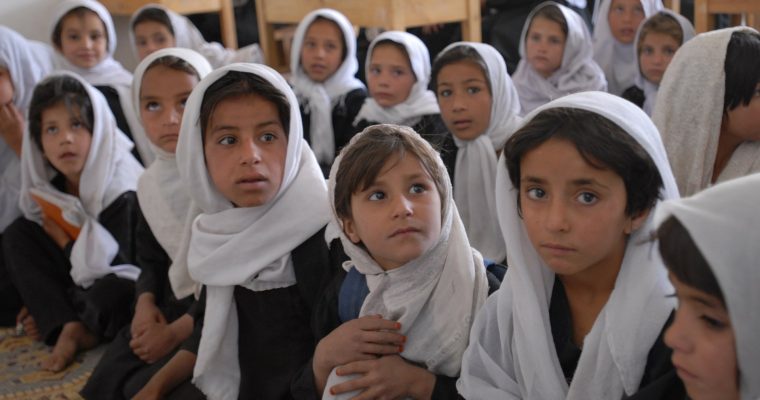
If Obama is serious about changing anti-American sentiments that plague the Arab world, he has to invest in the intellectual infrastructure, starting with an illiteracy rate in Afghanistan that is among the lowest in the world. Decades of war have left the Afghan children rootless and disenfranchised. Their ideological bearings come from maddrasses where extremism, cloaked under benevolent Islamic evangelism, is being injected into their young minds. Schools are where the struggle of ideas occurs and where we could have worked toward eradicating anti-American sentiments. For the past fifteen years, Greg Mortesson, best known for his bestseller Three Cups of Tree, has worked to promote peace in Afghanistan, one book, one desk, one good school, at a time. In a country where the literacy of the female Afghans languishes in the single digits, he has built more than 130 schools, mostly for girls. The question is: whether his efforts, and those of thousands of other humanitarian organizations, like Doctors without Borders who risk their lives to treat the sick and the wounded in Afghanistan, will be undermined by our hasty departure. The least we can do, have to do, is create a milieu for political reform processes, enabling legitimate civil society actors, Afghan or foreign, to promote basic humanitarian needs.

The Enterline Study

Posted on | February 28, 2010 | No Comments

Historically, military subversion of democracy to promote democracy has never worked. A counterinsurgency strategy that embraces the use of overwhelming force as the cornerstone of its tenet, unlike some analysts have recently implied, is not a “winning” strategy. In a widely circulated report political scientist Enterline and his graduate student Magagnoli, argue that if sufficient military resources are allocated, based on historical evidence, wars against insurgencies can be won. Their analysis is flawed. What they categorize as “wins” actually denote blundering failures in terms of the human toll of the conflicts and the end political result.
According to the study, the list of “winners” of COIN tactics in the post-WWII era includes the French campaign in Algeria. That is a historical blasphemy. Not only because ultimately the French were defeated and Algeria became an independent state but also because of the human toll of the war, one million Muslims and 27,000 French dead, and million injured on both sides. Another “win” is the Second Chechen War. It is true that after a massive Russian assault that leveled the city of Grozny, with a death toll estimated at around 50,000 (mostly Chechen civilians) large-scale fighting has ceased, but sporadic violence still exists throughout the North Caucasus: The Chechen guerrilla resistance throughout the North Caucasus region continues to inflict Russian casualties through bombings and ambushes on the federal troops and forces of the regional governments. The militants have not been defeated. Most likely, they are also familiar with Sun-Tzu’s teachings. In the Enterline study, Iraq is also classified as a “win”. Ignoring the human toll of that war—thousands of American soldiers dead, tens of thousands crippled and psychologically marked for life (conservative estimates put two out of ten soldiers coming home with PSTD which is almost always chronic and often as ghastly as a missing limb), and millions of Iraqis dead, injured, misplaced—if we only factor in the political end-result, it is safe to say that the only “winner” is the Islamic Republic of Iran, which will, when the dust settles, project its “influence and power” by restoring friendly relations with Iraq. Some of the most respected clerics in Iraq, like Ayatollah Sistani come from Iran. The major militia is Southern Iraq, the Badr Brigade, was trained in Iran, and its officers are mostly Shiites. Add the largely Shiite areas in Saudi Arabia and this informal Shi’a “coalition” could include close to seventy percent of the world’s estimated hydrocarbon reserves. The common economic conjecture was that the U.S. would invade Iraq, double its oil production to seven million barrels a day by 2010 and end OPEC’s hegemony. It did not quite work out that way. In fact, chances are that if you (unless you are a Halliburton executive) are worse off economically because of the war.
If the data in the Enterline study is closely scrutinized we will come to the sobering conclusion that insurgencies are very tough, if not impossible, to beat using a predominately military strategy. Military analysts, by large, agree that a 20% success rate is realistic, and only when the insurgency has not taken deep roots and does not enjoy popular support. In case of the Taliban, they are deeply embedded in the social milieu, and, although the Afghans may not say this to our faces, the extremists are preferred to the uncouth foreign occupiers.

Transforming Afghanistan Before it Transforms Us

Posted on | February 28, 2010 | No Comments

Their God doesn’t want to hurt us. People who have buried their children have no God.

Despite president Obama’s rhetoric about change, his war strategy on Afghanistan has strong echoes of his predecessor’s botched attempts to apply post-conflict reconstruction-style tools to a live conflict peppered with tones of Wilsonian idealism and the disconcerting mix of democracy-promotion rhetoric while upholding the policy of licensing pro-American dictators. Obama has excluded “a more dramatic and open-ended escalation” of the war effort in Afghanistan, one that “would commit the U.S. to a nation-building project of up to a decade”, signaling that he will not sacrifice immediate popularity, transcend the conventional logic of a militarized quick-fix over a comprehensive framework, including a plan for socio-economic transformation. The fact that the troop surge—the cornerstone of the strategy—is expected to show results before the 2010 American mid-term election, and the drawdown is due to begin right after the next presidential campaign, underlines the fact that the president is opting for what is politically attractive, choosing short-term pragmatism over a piecemeal reformist solution, which may be controversial and take longer. The accidental death of 27 civilians as a result of a UN strike today confirms that we are still operating within the ideological overload of post 9/11, undermining our narratives of change. Worst of all, with the strategy’s focus on the military surge in population centers combined with its contradictory premise of withdrawal within eighteen months, and its message that we would not be fighting “an endless war” Obama signaled to the extremists (who are strongest around the border areas) that America is tiring of the war—the first tell-tale sign that we’re bracing ourselves for the impending defeat.

Nuclear Showdown

Posted on | February 24, 2010 | No Comments

Sarah Palin wants Obama to scramble the jets to bomb the Iranian nuke sites, or have Israelis do it.

The problem is that, while we do know that Iran’s nuclear program exists, there is no actionable intelligence (unbiased, credible, so forth) as to the intentions of the regime. Do they want to be one turn of the screw away from a bomb in order to be able to assemble a bomb in case of an act of aggression, or do they want to relegate the Jerusalem-occupying regime to the pages of history? A track record of three decades of pragmatic decision-making and the mullah’s instinct of self-preservation suggest that the nuclear program is a deterrent, a defensive measure against what the Islamic Republic perceives as viable threats to its existence, and not offensive.

The intelligence on the Iranian agenda is a black hole not a shining star. The recent “neutron initiator document” published by the Times of London was a forgery, a very bad one. Previous accounts are also as credible as the data on WMDs in Iraq. There are also questions of morality and the rules of sovereignty that raise the bar for the burden of justification of an Israeli attack.

Despite the inflammatory rhetoric of the bellicose midget (Ahmadinejad) which is geared toward the hearts of the Sunnis in Gaza (good politics, actually) Iran has no stake in Gaza and no intention in committing existential suicide. The U.S., also, doesn’t want to create a failed state in the midst of the current quagmire, which would, heaven forbid, require additional deployment of troops. And additional deaths. Lots of them.

Robert Gates noted in 2008, “Taking on Iran is not an option.” Two days ago admiral Mullen confirmed the same sentiments. On the other hand Obama’s strategy—a systematic effort to drive a wedge between the population and the Islamic Revolutionary Guard Corps by targeting the specific assets of the IRGC—is also headed for failure. Iran cannot be isolated without Russia and China who see the U.S.’ strategies as contradictory to their own interest. Besides, during the past three decades, the Iranian regime has developed an extra chromosome for mitigation—as far as sanctions are concerned.

Containment of Iran’s nuclear program may be anchored in “imaginative ideas” or what Kissinger called realpolitics. There are many areas where the interest of the U.S. coincide with those of Iran, and considering Iran’s ambitions pose no imminent threat to the U.S., perhaps it is time to finally sit down and have a conversation with the devil. No matter how agreeably disguised, retaliation is retaliation.

Technorati

Posted on | September 24, 2009 | No Comments

ztef89sank

Testimonial

"Alessandro’s insightful, progressive and a pleasure to work with. His integrity is second to none. He was cognizant of my requests and supportive in all respects. His writing and communication perspective contributed to a superbly written, informative and visually appealing site, leading to numerous opportunities. I owe a good measure of my success to the professionalism of Alessandro's contributions, and look forward to an ongoing relationship.”
Albert Sironi, Art Director

Subscribe to our feed

Search

Admin